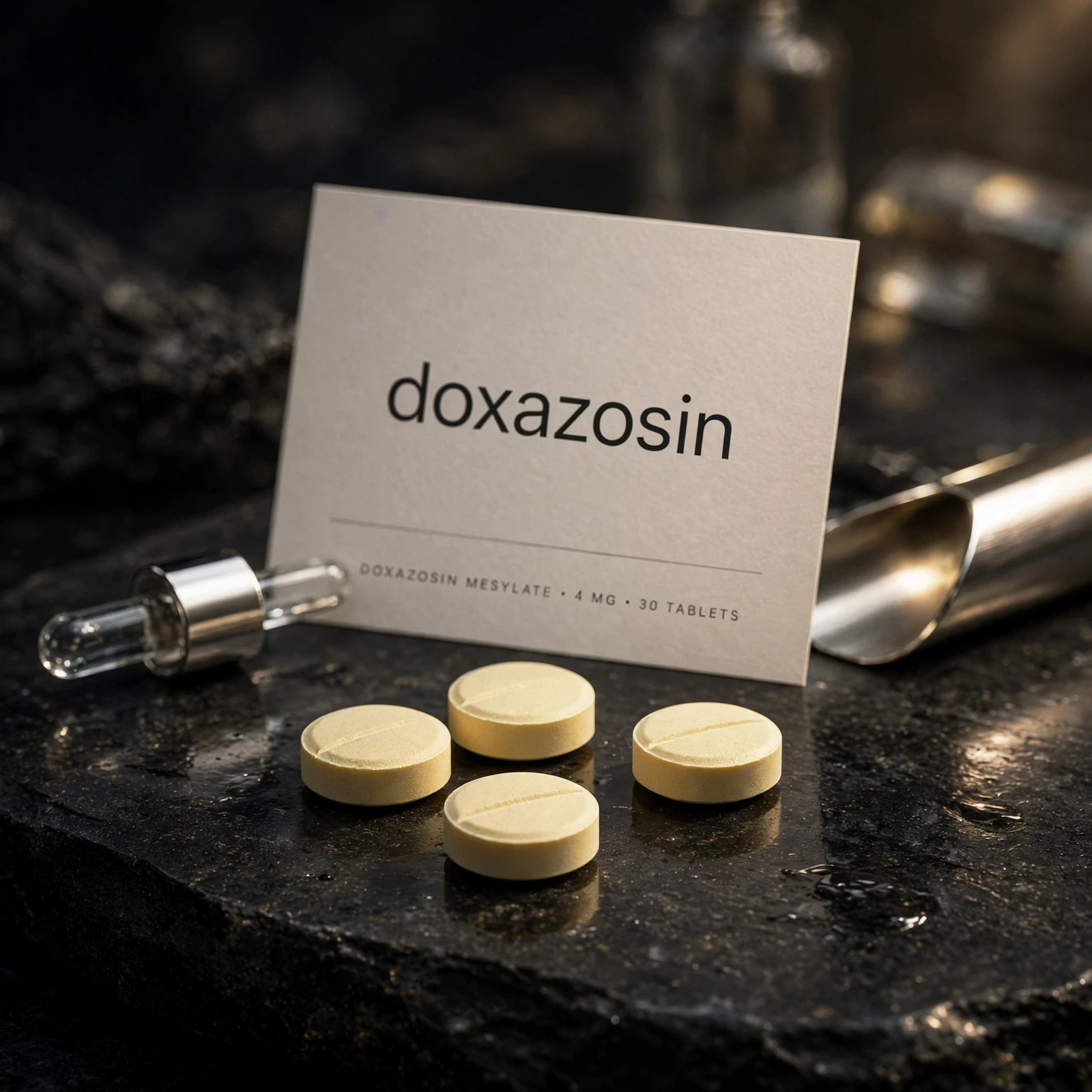
Doxazosin is indicated mainly for two clinical situations: symptomatic benign prostatic hyperplasia (BPH) and hypertension. In BPH, doxazosin relaxes smooth muscle in the prostate and bladder neck, improving urinary flow, decreasing urinary hesitancy, urgency, and nocturia in many men. For hypertension, doxazosin reduces peripheral vascular resistance by blocking alpha-1 receptors in blood vessels, lowering systolic and diastolic blood pressure. Clinicians may choose doxazosin when patients have both BPH and elevated blood pressure because a single agent can address both problems. It is usually not the first-line antihypertensive for patients with isolated hypertension unless other factors make it appropriate.
Dosing varies by indication, formulation, and patient tolerance. For benign prostatic hyperplasia, typical initiation starts at 1 mg once daily at bedtime to reduce the risk of orthostatic hypotension; doses may be titrated to 2 mg, then 4 mg, and sometimes 8 mg daily depending on response and tolerability. For hypertension, initial dosing also commonly begins at 1 mg once daily, with gradual titration up to a usual effective range of 2–8 mg daily; some patients may require up to 16 mg, although this is less common. Extended-release tablets (XL) provide smoother plasma levels and improved compliance with once-daily dosing; immediate-release tablets may be split across doses only if advised by a clinician. Always follow the prescribing instructions, take the medication at the same time each day, and consider taking the first doses at bedtime to mitigate dizziness.
Doxazosin can cause significant hypotension, particularly after the first dose or after dose increases; patients may experience lightheadedness, dizziness, or syncope. This “first-dose phenomenon” is a critical precaution—initial dosing at bedtime and slow titration help reduce risk. Evaluate cardiovascular status before and during treatment; use caution in patients with significant coronary artery disease, cerebrovascular disease, or volume depletion. Renal dosing adjustments are generally not required, but monitor patients with severe renal impairment closely. Because doxazosin is metabolized by the liver, exercise caution in hepatic impairment and consider dose adjustments. Inform ophthalmic surgeons of α1-blocker therapy, as intraoperative floppy iris syndrome has been reported with this drug class and may complicate cataract surgery.
Doxazosin is contraindicated in patients with known hypersensitivity to doxazosin, other quinazoline-derived alpha-blockers, or any component of the formulation. Severe hypersensitivity reactions, including angioedema and anaphylaxis, require immediate discontinuation and emergency treatment. Use is generally avoided in patients with a history of orthostatic syncope related to alpha-blockade. Although not absolutely contraindicated in pregnancy or breastfeeding, doxazosin is rarely indicated in these populations; discuss potential risks with a clinician. Exercise caution when combining doxazosin with potent CYP3A4 inhibitors—consider alternative therapy or dose adjustment if clinically necessary.
Common adverse effects include dizziness, lightheadedness, fatigue, headache, nasal congestion, and peripheral edema. Orthostatic hypotension can occur, especially during dose initiation or escalation, and may present as fainting or falls—older adults are particularly vulnerable. Gastrointestinal complaints such as nausea are less common. Sexual side effects are generally infrequent but can include decreased libido or, rarely, priapism, which is a medical emergency requiring prompt intervention. Most side effects improve with continued therapy or dose adjustment; however, any severe or persistent symptoms should prompt clinical reassessment. Report symptoms of severe allergic reaction, persistent dizziness, fainting, or prolonged penile erection immediately.
Doxazosin interacts with several drug classes and substances, increasing the risk of hypotension when combined with other antihypertensives, vasodilators, nitrates, or phosphodiesterase type 5 (PDE5) inhibitors such as sildenafil. If coadministration with PDE5 inhibitors is necessary, clinicians should counsel patients about additive blood pressure-lowering effects and start at low doses with careful monitoring. Concomitant use with strong CYP3A4 inhibitors (for example, ketoconazole, ritonavir) may increase doxazosin levels and risk adverse effects; consider adjusted dosing or alternative agents. Concomitant diuretics and beta-blockers may potentiate hypotension; monitor closely. Always review prescription, over-the-counter, and herbal medications—agents like St. John’s wort can alter cytochrome activity and affect drug concentrations.
People exploring additional medication choices may also review Azulfidine information after learning about available treatment options.If you miss a dose of doxazosin, take it as soon as you remember on the same day unless it is almost time for the next scheduled dose. Do not double the next dose to make up for a missed one. For once-daily dosing, skipping an occasional dose is less likely to cause severe issues but may reduce symptom control. Consistent daily dosing at the same time improves steady-state levels and symptom management. If multiple doses are missed or if adherence is inconsistent, contact your healthcare provider before restarting therapy—re-initiation may require a lower starting dose to avoid hypotensive episodes.
Overdose primarily produces excessive alpha-adrenergic blockade resulting in marked hypotension and reflex tachycardia. Management is supportive: place the patient supine, maintain airway and breathing, and institute intravenous fluids to restore blood pressure. If hypotension persists, use vasopressors (such as norepinephrine) guided by clinical response. Activated charcoal may be considered if presentation is early and ingestion was recent; gastric lavage is rarely indicated but may be considered in life-threatening ingestions under specialist guidance. Continuous cardiac monitoring is recommended for significant overdoses. Admit symptomatic patients for observation until hemodynamic stability is achieved.
Store doxazosin tablets at room temperature, typically between 20°C and 25°C (68°F–77°F), in a dry place away from excessive heat and moisture. Keep the medication in its original container, tightly closed, and out of reach of children and pets. Do not use expired tablets. For safety, dispose of unused or expired medication according to local regulations or pharmacy take-back programs rather than flushing medicines or discarding them in household trash. If tablets are split or cut, follow manufacturer and pharmacist guidance to ensure dose accuracy, especially with extended-release formulations which should not be crushed or chewed.
In the United States, doxazosin is a prescription medication regulated by federal and state laws. Legitimate access typically requires a clinician’s evaluation, diagnosis, and written prescription. Sunshine Pharmacy provides a structured, legally compliant pathway to obtain doxazosin without a traditional in-person prescription visit: patients can complete an online medical assessment reviewed by licensed clinicians who may issue prescriptions when appropriate. This telehealth-integrated approach ensures clinical oversight, safety screening for interactions and contraindications, and pharmacist counseling prior to dispensing. Sunshine Pharmacy emphasizes adherence to regulatory standards, patient education, and follow-up care to support safe use while improving access for patients who may face barriers to in-person care.
Important safety points include: start at low doses and titrate slowly to minimize the risk of severe hypotension and syncope; avoid driving or operating heavy machinery until you know how doxazosin affects you; avoid excessive alcohol intake which can exacerbate orthostatic effects; inform all healthcare providers, including dentists and surgeons, that you take doxazosin; and never abruptly discontinue therapy without medical advice. Pregnant or breastfeeding patients should consult their clinician because alternatives may be preferable. If you experience signs of a severe allergic reaction (rash, swelling, difficulty breathing), prolonged painful erection (priapism), fainting, or chest pain, seek immediate medical attention.
For patients prescribed doxazosin: take it exactly as directed—usually once daily at the same time. Consider taking the initial doses at bedtime to lessen dizziness. Rise slowly from lying or seated positions to reduce orthostatic symptoms. Keep a blood pressure log and report symptomatic hypotension or fainting. Inform your clinician of all medications, including over-the-counter drugs and supplements, to avoid interactions. Maintain scheduled follow-up visits for blood pressure and symptom evaluation; lab testing is rarely required but clinical monitoring is essential. Store medications securely and consult your pharmacist or Sunshine Pharmacy’s clinical team with any questions about dosing, side effects, or how to buy doxazosin without prescription through their regulated service.
Doxazosin is an oral alpha-1 adrenergic blocker that relaxes smooth muscle in the prostate, bladder neck, and blood vessel walls by blocking alpha-1 receptors, which improves urine flow in benign prostatic hyperplasia (BPH) and lowers blood pressure by vasodilation.
Doxazosin is commonly used to treat symptoms of BPH and as an antihypertensive agent; it may also be used off-label for urinary retention related to prostatic obstruction.
Blood pressure effects can occur within hours of the first dose; urinary symptom improvement for BPH is often noticed within days but may take several weeks for maximal benefit.
Common side effects include dizziness, lightheadedness (especially on standing), fatigue, headache, nasal congestion, and swelling; these are largely related to blood-pressure lowering effects.
Serious concerns include first-dose or postural hypotension leading to syncope, significant dizziness, and very rarely priapism. Doxazosin is also associated with intraoperative floppy iris syndrome (IFIS) during cataract surgery; tell your eye surgeon if you’ve taken it.
It is often started at a low dose, taken at bedtime for the first doses to reduce first-dose hypotension, and then titrated slowly. Avoid sudden standing, get up slowly, and refrain from driving or hazardous activities until you know how it affects you.
Yes—additive hypotension can occur with other antihypertensives, nitrates, and phosphodiesterase-5 inhibitors (e.g., sildenafil). Use caution with CYP3A4 inhibitors though the major clinical concern is hypotension when combined with other vasodilators.
Doxazosin can cause sexual side effects including decreased libido, erectile changes, and occasionally ejaculatory disturbances, though ejaculatory dysfunction is more pronounced with some prostate-selective agents.
Routine bloodwork is not universally required, but monitor blood pressure (including orthostatic checks) after starting or changing doses. Monitor for symptom relief and adverse effects; liver function checks may be considered if there are concerns because it is hepatically metabolized.
It can be used in older adults but start at lower doses and titrate slowly because the elderly are more prone to orthostatic hypotension and falls.
If discontinuing, discuss with your clinician. It is usually stopped without complex tapering, but you should be monitored for return of urinary symptoms or blood pressure changes and for any rebound effects.
Yes, doxazosin is available as a generic (doxazosin mesylate) and in both immediate-release tablets and extended-release formulations, enabling once-daily dosing options.
Doxazosin is not typically used in pregnancy; its use in women of childbearing potential should involve careful consideration, and breastfeeding safety should be discussed with a clinician—its primary indications are in men with BPH and people with hypertension.
Alpha-blockers can aid ureteral stone passage, but evidence favors tamsulosin; doxazosin has less supporting data and is not the first-line choice for medical expulsive therapy.
Inform your ophthalmologist if you are taking or have taken doxazosin or any alpha-1 blocker because of the risk of intraoperative floppy iris syndrome (IFIS); the surgeon can plan precautions to reduce complications.
Tamsulosin is more selective for alpha-1a receptors in the prostate and bladder neck, offering similar urinary symptom relief with a lower risk of systemic blood-pressure drops; doxazosin is less selective and more likely to lower blood pressure, so tamsulosin is often preferred when blood pressure control is not desired.
Both are nonselective alpha-1 blockers effective for BPH and hypertension. Doxazosin has a longer half-life offering convenient once-daily dosing (and XL formulations), whereas terazosin can require careful bedtime dosing and titration; side effect profiles are similar, particularly orthostatic hypotension.
Prazosin is shorter-acting and usually requires multiple daily doses; it is commonly used for hypertension and PTSD-related nightmares. Doxazosin’s longer duration and once-daily dosing make it more convenient for chronic BPH or blood-pressure control.
Alfuzosin is more uroselective and tends to have less effect on systemic blood pressure than doxazosin, making it preferable when minimizing hypotension is important; alfuzosin is contraindicated with strong CYP3A4 inhibitors and liver impairment should be considered.
Silodosin is highly selective for alpha-1a receptors, providing effective urinary symptom relief with minimal blood-pressure effects but a higher rate of ejaculatory dysfunction; doxazosin has more systemic effects including potential blood-pressure lowering and fewer ejaculatory issues comparatively.
Nonselective agents like doxazosin or terazosin can treat both conditions simultaneously because they lower blood pressure while improving urinary flow, but careful titration and monitoring are required to avoid orthostatic hypotension.
Uroselective agents such as tamsulosin, alfuzosin, or silodosin are typically preferred because they have less effect on vascular alpha-1b receptors and therefore lower risk of orthostatic hypotension.
Tamsulosin has the strongest association in the literature, but all alpha-1 blockers—including doxazosin—can contribute to IFIS; any prior or current alpha-blocker use should be reported before eye surgery.
Silodosin and tamsulosin (due to higher alpha-1a selectivity) are more frequently associated with ejaculatory dysfunction than nonselective agents like doxazosin, though ejaculatory side effects can occur with any agent.
Doxazosin (especially extended-release formulations) and tamsulosin generally allow once-daily dosing, improving adherence compared with shorter-acting options like prazosin.
Most alpha-blockers (doxazosin, terazosin, tamsulosin, alfuzosin, prazosin) are available as generics and are relatively affordable; newer agents like silodosin may be more expensive and sometimes less widely available depending on country and insurance coverage.
Tamsulosin has the most consistent clinical trial support for medical expulsive therapy; doxazosin has less robust evidence and is not commonly the first choice for stone passage.